Quick answer: A student trip to Morocco works well as 5 to 7 days: Marrakech, the road over the High Atlas via Ait Benhaddou and the Dades and Todra valleys, a night in a desert camp in the Merzouga dunes, and a finish in Fes. Sharing a group tour keeps costs low, with desert trips for students starting from around €250 per person for four days including transport, accommodation and most meals.
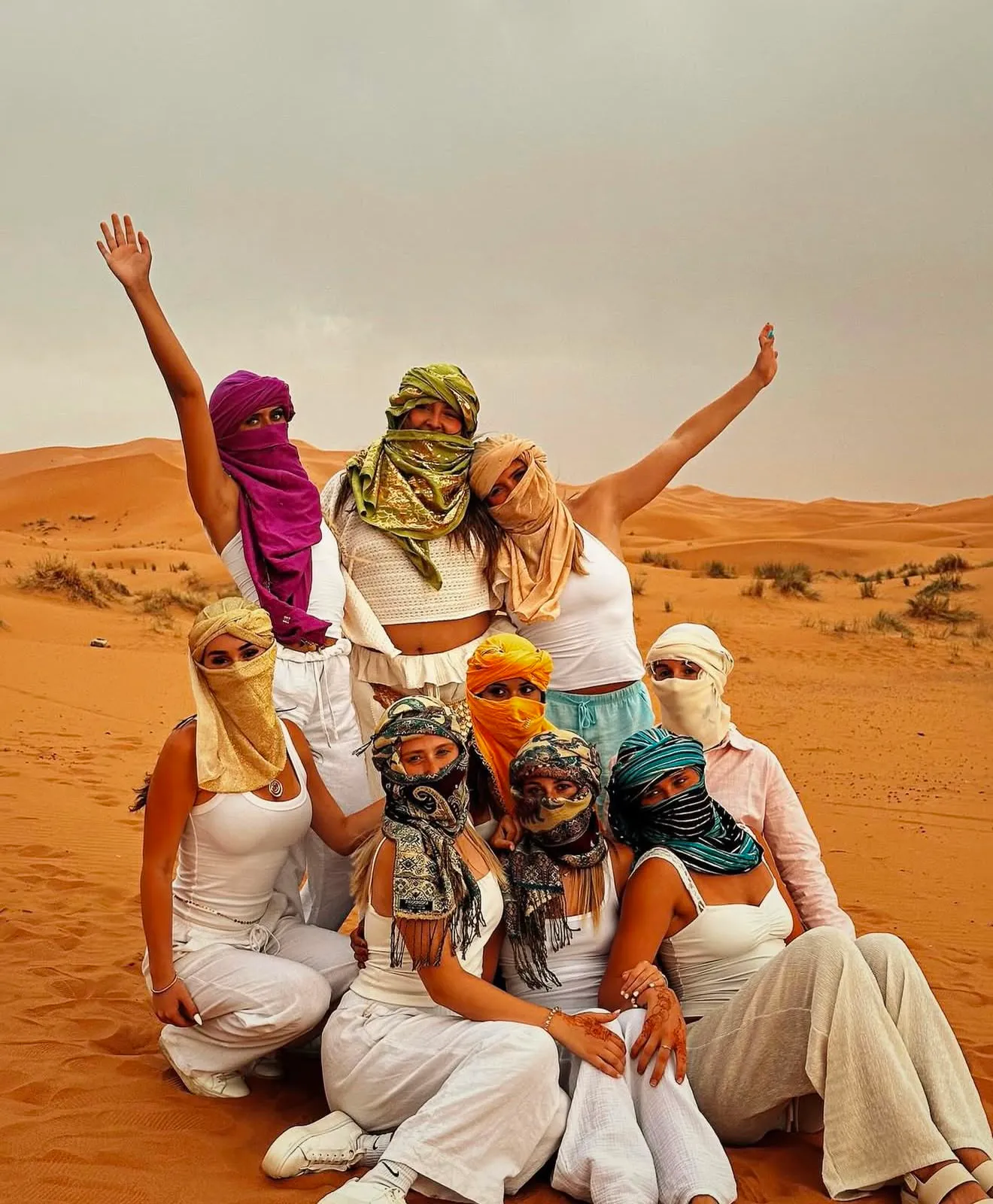
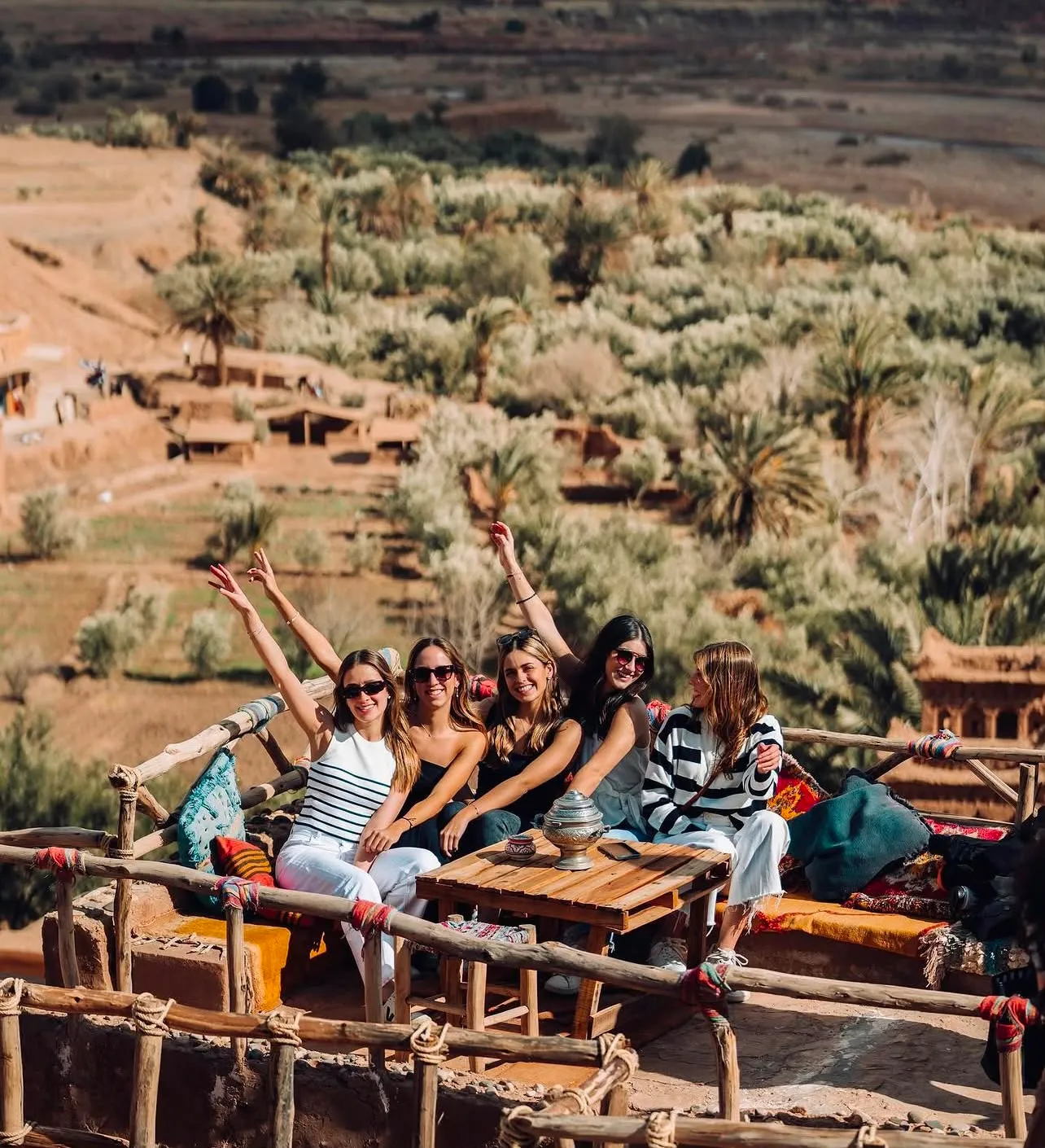
Every spring and autumn, groups of students arrive in Merzouga: Erasmus friends from Spain, university clubs, language schools and groups of friends on a first big trip. Morocco is ideal for them. Flights from Europe are often cheap, the culture is completely different yet welcoming, and the Sahara delivers an experience that no city break can match. As a local desert team we have organised many of these trips, and this is the advice we give.
Why Morocco for students?
- Affordable: low-cost flights from many European cities, and daily costs well below Western Europe.
- Short distance, big contrast: 3 to 4 hours by plane from most of Europe, and a different continent, language and landscape.
- Learning on the road: Islamic architecture, Amazigh (Berber) culture, Arabic and French, geology, desert ecology and the history of the caravan trade.
- A shared adventure: nights around a fire in the dunes build strong group memories.
A classic 4-day student route
- Day 1 – High Atlas and Ait Benhaddou: leave Marrakech early, cross the Tizi n'Tichka pass (about 2,260 m), explore the UNESCO ksar of Ait Benhaddou, night in the Dades Valley.
- Day 2 – Todra Gorge to Merzouga: walk through the gorge, continue to Merzouga, camel ride at sunset and a night in a desert camp.
- Day 3 – Desert morning and Draa Valley: sunrise, sandboarding, visit to Khamlia village for Gnawa music, then the drive west through the Draa Valley to Ouarzazate.
- Day 4 – Back to Marrakech: the kasbahs of Ouarzazate, then over the High Atlas to Marrakech by late afternoon.
This mirrors our 4-day student and group trip to Morocco, a round trip from Marrakech with the Sahara at its centre.
How much does a student trip to Morocco cost?
| Item | Typical student budget |
|---|---|
| Return flight from Europe | Varies a lot; low-cost fares can be very cheap off-season |
| Hostel bed in Marrakech or Fes | Roughly €10 to €20 per night |
| Street food or simple meal | Roughly €3 to €8 |
| 4-day desert group trip | From around €250 per person |
| Extras (quads, souvenirs, tips) | Allow €50 to €100 |
The desert is the biggest cost, but also the part that is hardest to do alone because of distances and transport. A shared group vehicle is far cheaper than a private car. For more ways to save, read our guide to a cheap Sahara trip for students.
Organising a group
If you are a teacher, a student association or simply the friend who always organises everything, a few steps make life easier:
- Fix numbers early. Camps and vehicles are allocated by group size; 8 to 16 people fits one or two minibuses.
- Collect passport details and dietary needs in one shared form.
- Agree on house rules about alcohol, curfews and respect in villages.
- Choose one contact person who communicates with the tour operator.
- Buy travel insurance for everyone.
For schools with under-18s, extra planning is required around supervision ratios, consent and risk assessment. We cover that in detail in our guide to planning a school trip to Morocco.
Safety tips for young travellers
- Stick together in the medinas, especially at night, and share live locations.
- Politely decline unofficial guides who offer to show you the way; they expect payment.
- Keep phones and wallets in front pockets in busy squares.
- Drink bottled water and be careful with raw salads if your stomach is sensitive.
- Respect the sun: hats, sunscreen and water, even in spring.
- Never wander into the dunes alone at night; everything looks the same in the dark.
What to pack
Keep it light: a soft backpack is easier than a hard suitcase in the medinas and in minibus boots. Bring a warm fleece for desert nights, a scarf or buff against sand, sunglasses, sunscreen, a refillable bottle, a power bank and a small torch. Clothes that cover shoulders and knees are useful everywhere. Cash in dirhams is handy for snacks, tips and small souvenirs, since many village shops do not take cards; ATMs are easy to find in Marrakech, Fes, Ouarzazate and Rissani.
Culture and respect
Morocco is a Muslim country with conservative habits outside the big city centres. Dressing modestly, covering shoulders and knees, is respectful and avoids unwanted attention, for everyone. Ask before photographing people. Learn a few words: salam (hello), shukran (thank you) and la, shukran (no, thank you) go a long way. Alcohol is available in some bars and hotels, not everywhere; public drunkenness is frowned upon. During Ramadan, avoid eating and drinking openly in the street during the day.
Best time for a student trip
Spring (March to May) and autumn (September to November) are the best seasons: warm days, comfortable desert nights and fewer extreme temperatures. Many groups travel during Easter or reading weeks. Winter is sunny but cold at night in the desert, around 0°C in the dunes. Summer is very hot inland, often over 40°C in Merzouga, so it is better for the coast and mountains.
Plan your student trip with us
We are a small local team in Merzouga, and we love hosting young travellers who arrive curious and leave with stories. Our student group trip through Morocco and the Sahara starts from around €420 per person, with group rates for larger parties. Send us your group size, dates and budget through our contact page, and we will prepare a clear, fair quote.