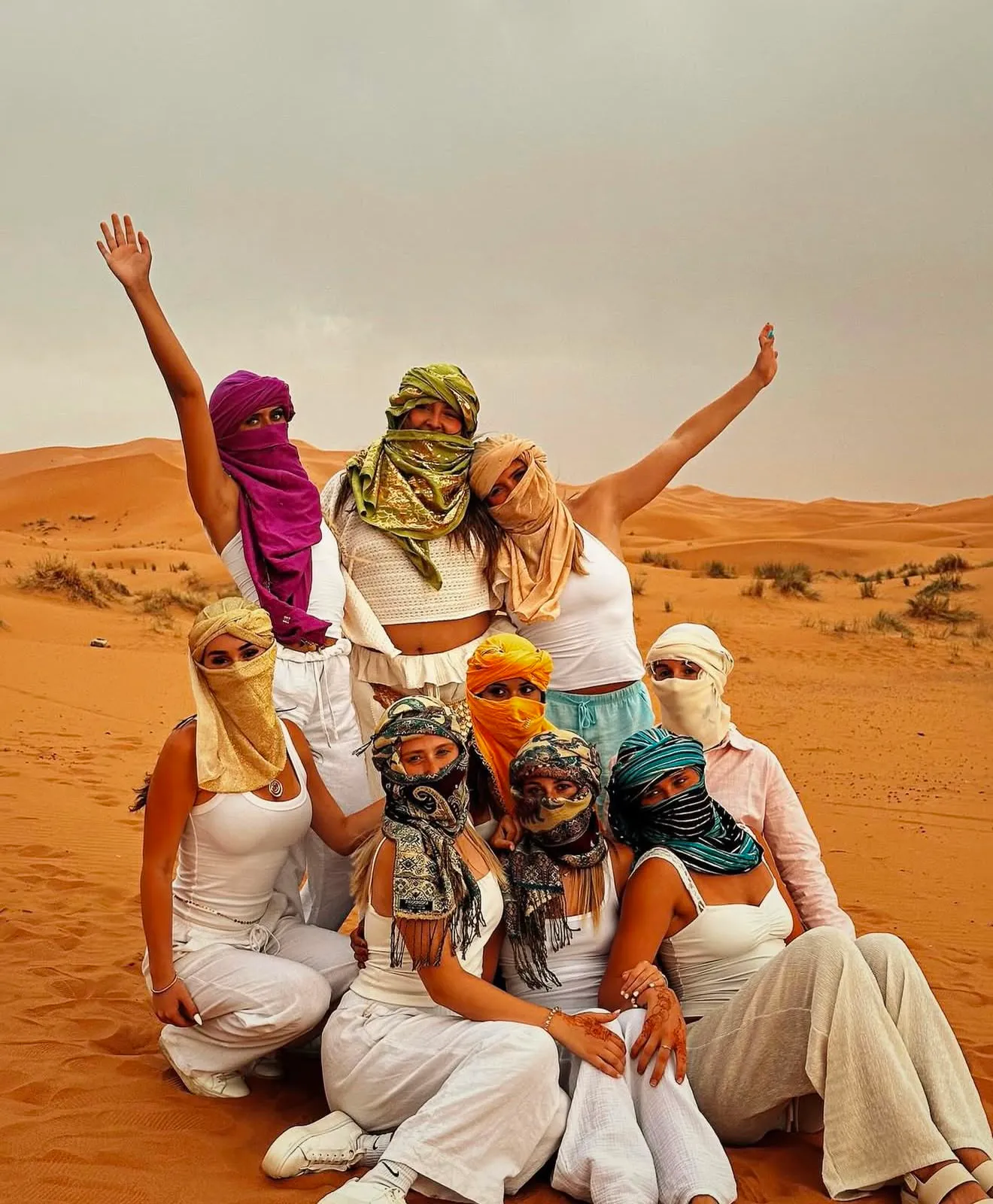
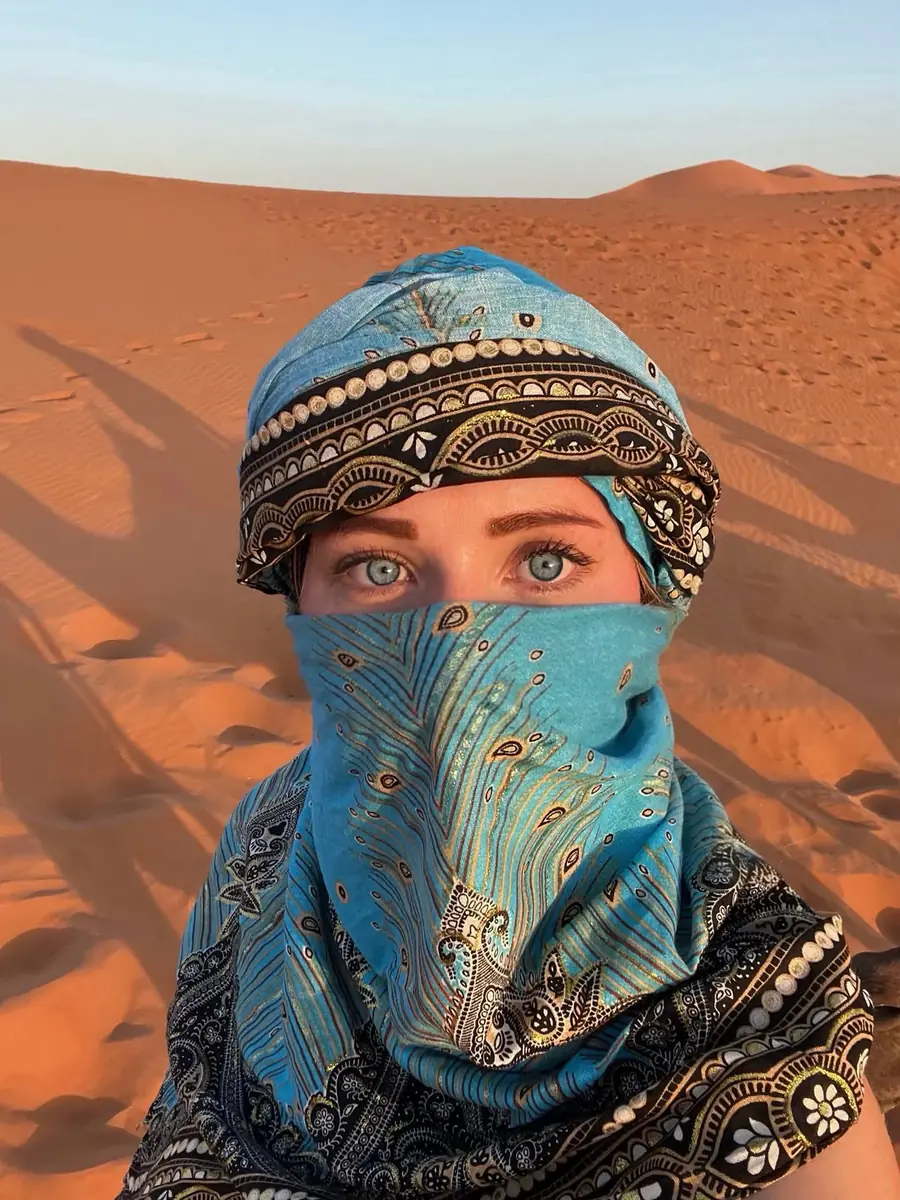
Quick answer: The cheapest realistic way for students to see the Sahara is to travel as a group, take the overnight bus or share a private transfer to Merzouga, and book one night in a standard desert camp with a camel trek. Expect roughly €75 to €120 per person for the desert part, or from about €250 per person for a 4-day organised group trip that covers transport, lodging and most meals.
Many of the travellers we meet in Merzouga are students on a gap year, an exchange semester in Rabat or Granada, or a university society trip. Budgets are tight, but the desert does not have to be expensive. This guide is our honest view on how to plan a cheap Sahara trip in Morocco for students, including the places where saving money is a false economy.
What a budget desert trip really costs
Prices below are rough estimates in euros and Moroccan dirham (at roughly 10 to 11 MAD to the euro; always check the current rate). They are per person and vary with season and group size.
| Item | Budget estimate |
|---|---|
| Overnight bus Marrakech or Fes to Merzouga | €20–€25 each way |
| Hostel or simple auberge in Merzouga | €10–€25 per night, often with breakfast |
| Camel trek + standard camp with dinner and breakfast | From €75 |
| Sandboarding session | From €35 with stargazing |
| Meals in local cafes | €4–€8 (40–90 MAD) |
| 4-day organised student group trip | From €250 |
Option 1: Independent travel by bus
The CTM and Supratours bus companies run daily services to Merzouga from Fes and Marrakech, usually overnight. It is the cheapest option, and it is safe and reasonably comfortable, though long: expect around 9 to 10 hours from Fes and 12 or more from Marrakech. Book seats a day or two ahead in busy periods.
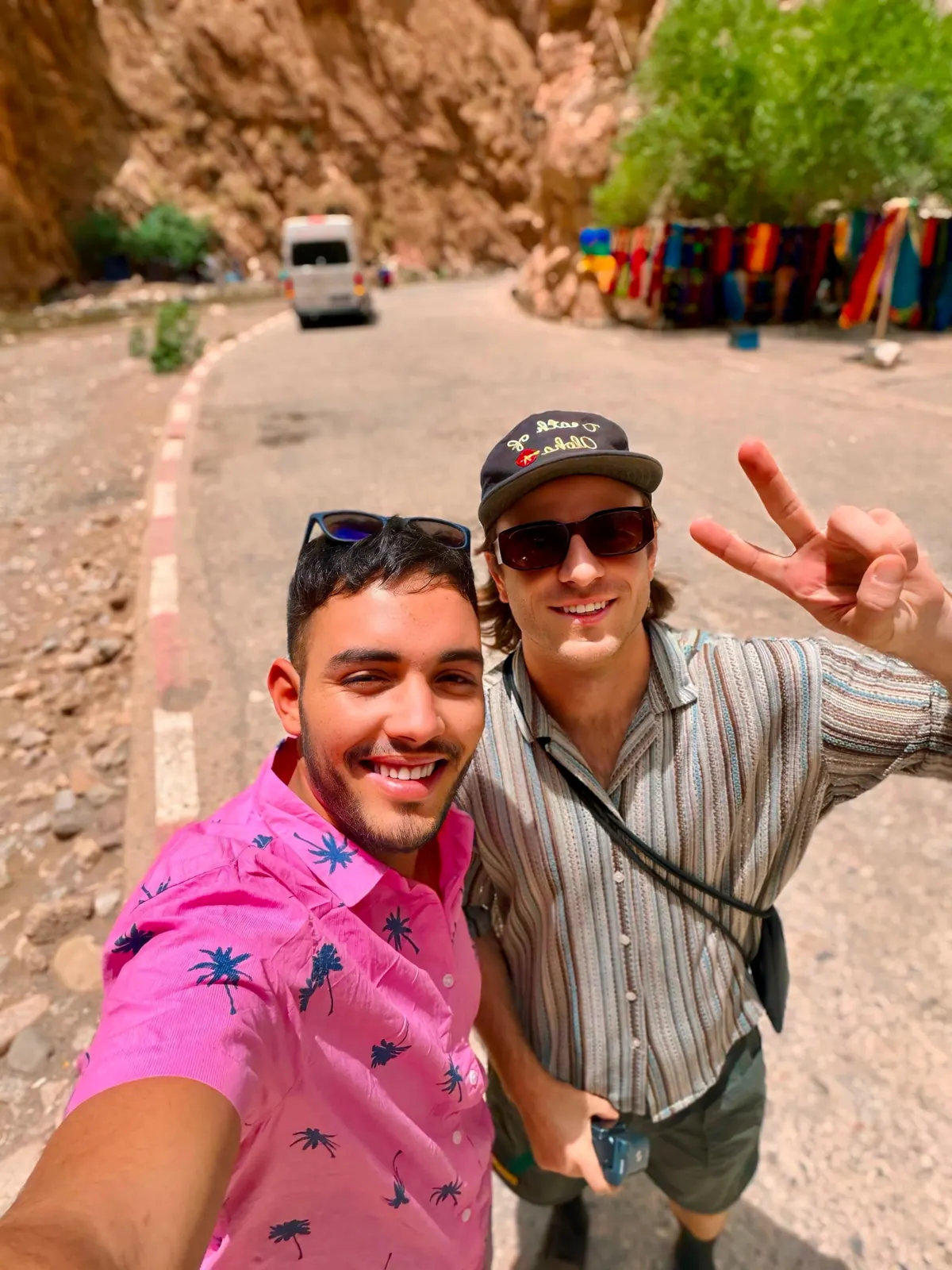
The downside is that you miss everything in between: the Todra Gorge, the Dades Valley, Ait Benhaddou and the Middle Atlas are what make the route special. You also arrive tired and need to arrange your camp locally. Our guide on planning a student trip to Morocco covers bus travel and hostels in more detail.
Option 2: Shared group tour from Marrakech
Very cheap three-day shared tours are sold all over Marrakech. Some are fine, but at the lowest prices corners are usually cut: large minibuses of 17 passengers, very long days, rushed stops at shops that pay commission, and basic camps that are sometimes far from the real dunes. Read what is included carefully and ask where the camp is.
Option 3: A private trip for your own group
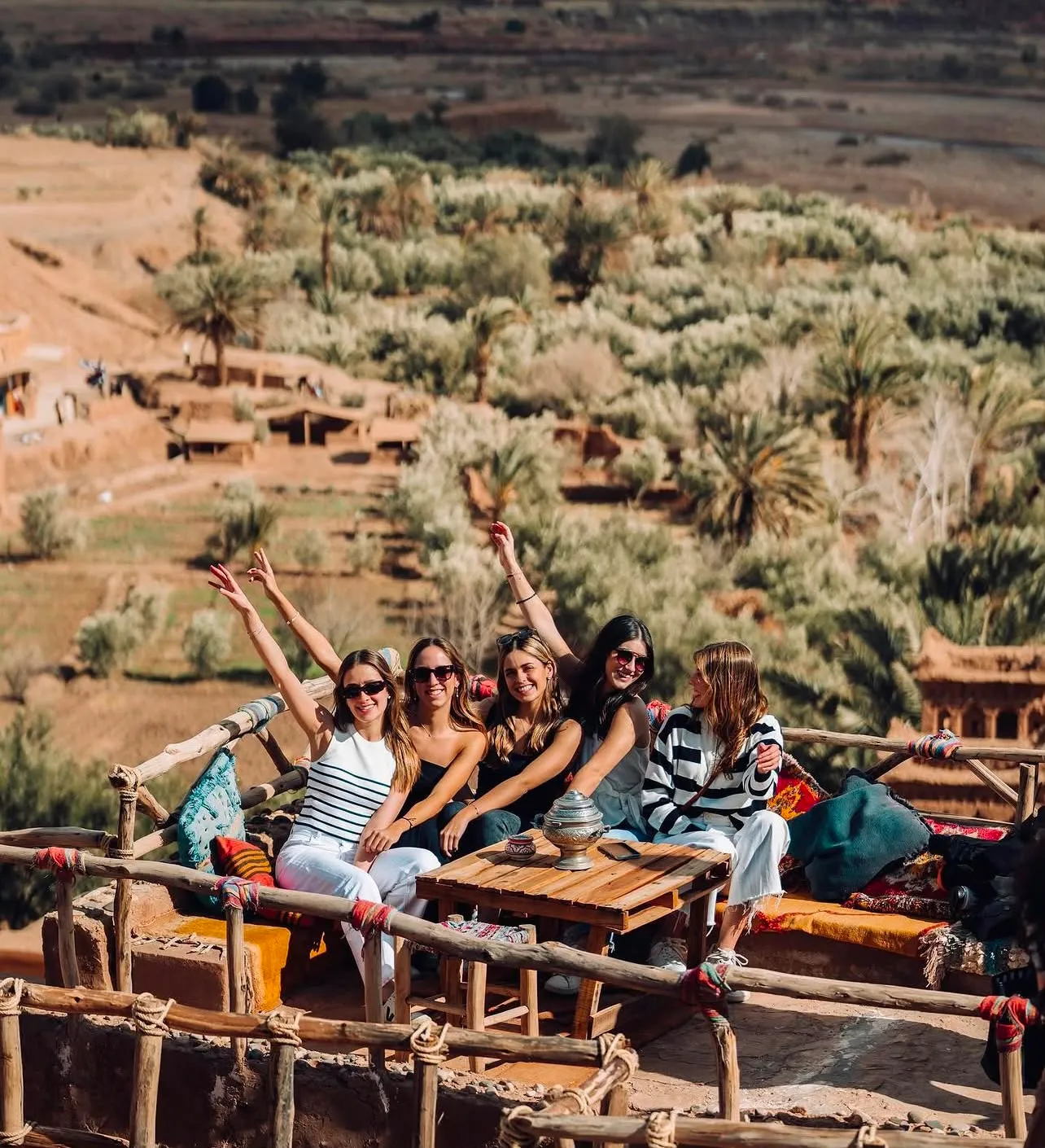
This is where students can win. If you have a group of eight to fifteen friends or society members, a private tour split between everyone often costs about the same as individual shared tours, with much better quality. You choose the pace, the stops and the camp. Our 4-day student and group trip is built exactly for this, and the price per person drops as your group grows.
Where students can save money
- Travel in shoulder season. March, early April, late October and November are cheaper than Easter and Christmas peaks, and the weather is excellent.
- Choose a standard camp. A clean standard camp with shared toilets gives you the same dunes and stars as a luxury camp for a fraction of the price.
- Eat where locals eat. A tagine in a village cafe costs much less than in a tourist restaurant. Try madfouna, the regional stuffed bread, which is filling and cheap.
- Carry a refillable bottle with a filter, or buy 5-litre bottles to share instead of small ones.
- Use an ISIC or student card where accepted; some monuments and museums offer reduced entry.
- Get cash in bigger towns. Merzouga has very limited ATMs, so withdraw dirham in Errachidia, Erfoud, Rissani or before leaving the city to avoid being stuck.
Where not to cut corners
We are a desert team, so we will be direct about this. Some savings are not worth it:
- Unlicensed guides and drivers. Accepting a lift from someone who approaches you at the bus station can end in pressure selling or worse. Book with an operator you can check.
- Quad bikes without helmets or proper briefing. Always insist on safety gear.
- Travel insurance. Make sure it covers adventure activities such as camel riding and sandboarding, and medical evacuation.
- Warm clothing in winter. Desert nights between November and February can drop close to zero. Being cold all night is miserable, and blankets at cheap camps can be thin.
A sample budget itinerary for students
- Day 1: overnight bus from Fes to Merzouga.
- Day 2: arrive early, rest at an auberge, afternoon camel trek and a night in a standard camp.
- Day 3: sunrise, breakfast, sandboarding in the morning, afternoon trip to Khamlia or Rissani market (Sunday, Tuesday or Thursday).
- Day 4: bus onwards or shared transfer towards the Todra Gorge and Marrakech.
If you are travelling with a school or university group rather than a few friends, our guide to planning school group travel in Morocco explains supervision, paperwork and timing.
Staying safe on a budget
Morocco is a welcoming country for young travellers, and most problems are minor: persistent sellers, taxi drivers who “forget” the meter, and pickpocketing in crowded medinas. Walk confidently, agree taxi prices before getting in, and keep phones and cards in a zipped pocket. Female students often find it helps to travel in mixed groups and dress modestly, with shoulders and knees covered. Save the emergency numbers: 19 for police in towns and 177 for the Gendarmerie in rural areas.
Is a cheap desert trip still worth it?
Absolutely. The dunes of Erg Chebbi look the same whether you paid €75 or €750. Sunset from the top of a dune, dinner around the fire and a sky full of stars are the heart of the experience, and none of that costs extra. Spend your money on a well-run camp close to the dunes and a trustworthy team, and save everywhere else.
Plan a student-friendly Sahara trip with us
We enjoy hosting student groups and are happy to work within a budget. Have a look at our student and group trip to Morocco, browse our other desert tours, or tell us your numbers and dates through our contact page for a clear, honest quote.