Quick answer: A school trip to Morocco works best as a 5 to 7 day private group itinerary in spring or autumn, combining a city such as Marrakech or Fes with one night in a desert camp at Merzouga. Book 4 to 6 months ahead, keep a ratio of roughly one adult per 8 to 10 students, and choose an operator who handles transport, meals, guides and a clear risk plan for you.
Every year we welcome groups of students to the dunes of Erg Chebbi, and we know the teacher leading them has a very different job from a holidaymaker. You are responsible for thirty young people, parents back home, a head teacher who wants paperwork, and a budget that cannot stretch. This guide sets out how we plan school group travel to Morocco, what to think about months in advance, and how to turn a desert trip into real learning.
Why Morocco works so well for school groups
Morocco sits only a short flight from most European airports, usually three to four hours, and there is little or no jet lag. Within a few days students can move from a medieval walled medina to High Atlas villages, palm oases and the edge of the Sahara. That variety is rare, and it connects directly to school subjects:
- Geography: desertification, oases and the khettara underground irrigation channels, river gorges such as the Todra, sand dune formation.
- History: the four imperial cities, trans-Saharan trade routes, the fortified ksour and kasbahs of the south.
- Languages: real-world practice in French and an introduction to Arabic and Tamazight, the Amazigh (Berber) language.
- Religious education and citizenship: everyday Islam, hospitality customs and a multilingual society.
- Science: the fossil beds near Erfoud and some of the darkest night skies students will ever see.
When to take a school trip to Morocco
Timing is the single biggest decision. Summer in the desert is simply too hot for groups, with afternoon temperatures in Merzouga often above 40 °C in July and August. Mid-winter brings comfortable days but cold nights in camp, sometimes close to freezing. For most schools the best windows line up neatly with term breaks:
| Period | Desert conditions | Our view for groups |
|---|---|---|
| February half-term | Mild days (18–22 °C), cold nights | Good, pack warm layers |
| Easter / April | Warm days, pleasant nights | Excellent |
| October half-term | Warm days, comfortable nights | Excellent |
| June to August | Very hot, occasional sandstorms | Not recommended |
Also check the dates of Ramadan, which moves about eleven days earlier each year. Travel is perfectly possible during the holy month, but restaurants open later and students should be briefed on being discreet about eating in public during daylight.
Planning timeline for teachers
- 6 months before: agree learning aims, set a draft budget and request a quote with a day-by-day itinerary.
- 5 months before: hold a parents' information evening, collect deposits and confirm flights for the group.
- 3 months before: complete your school's risk assessment, collect passport details, dietary needs and medical consent forms.
- 1 month before: share the final kit list, emergency contacts and a code of conduct signed by students.
- 1 week before: confirm rooming lists and share them with your operator.
Passports should be valid for the whole stay; most EU, UK and North American citizens do not need a visa for stays of up to 90 days, but always check the latest rules for every nationality in your group, as students with other passports may need one.
A sample school itinerary including the Sahara
Our four-day student and group itinerary is a good starting point that many teachers adapt. A typical outline looks like this:
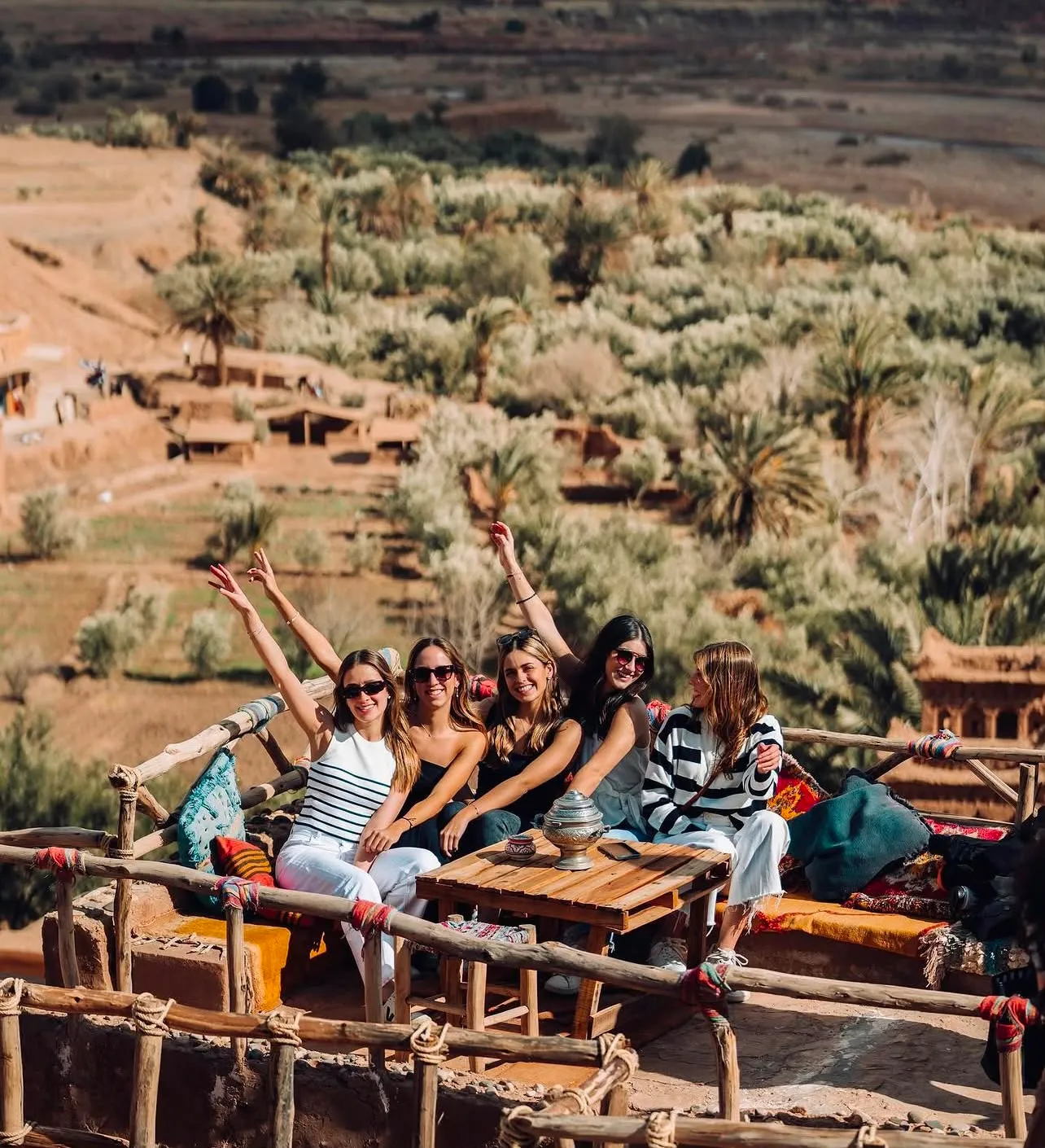
- Day 1: leave Marrakech and cross the High Atlas via the Tizi n'Tichka pass (2,260 m), visit Ait Benhaddou, overnight in the Dades or Todra area.
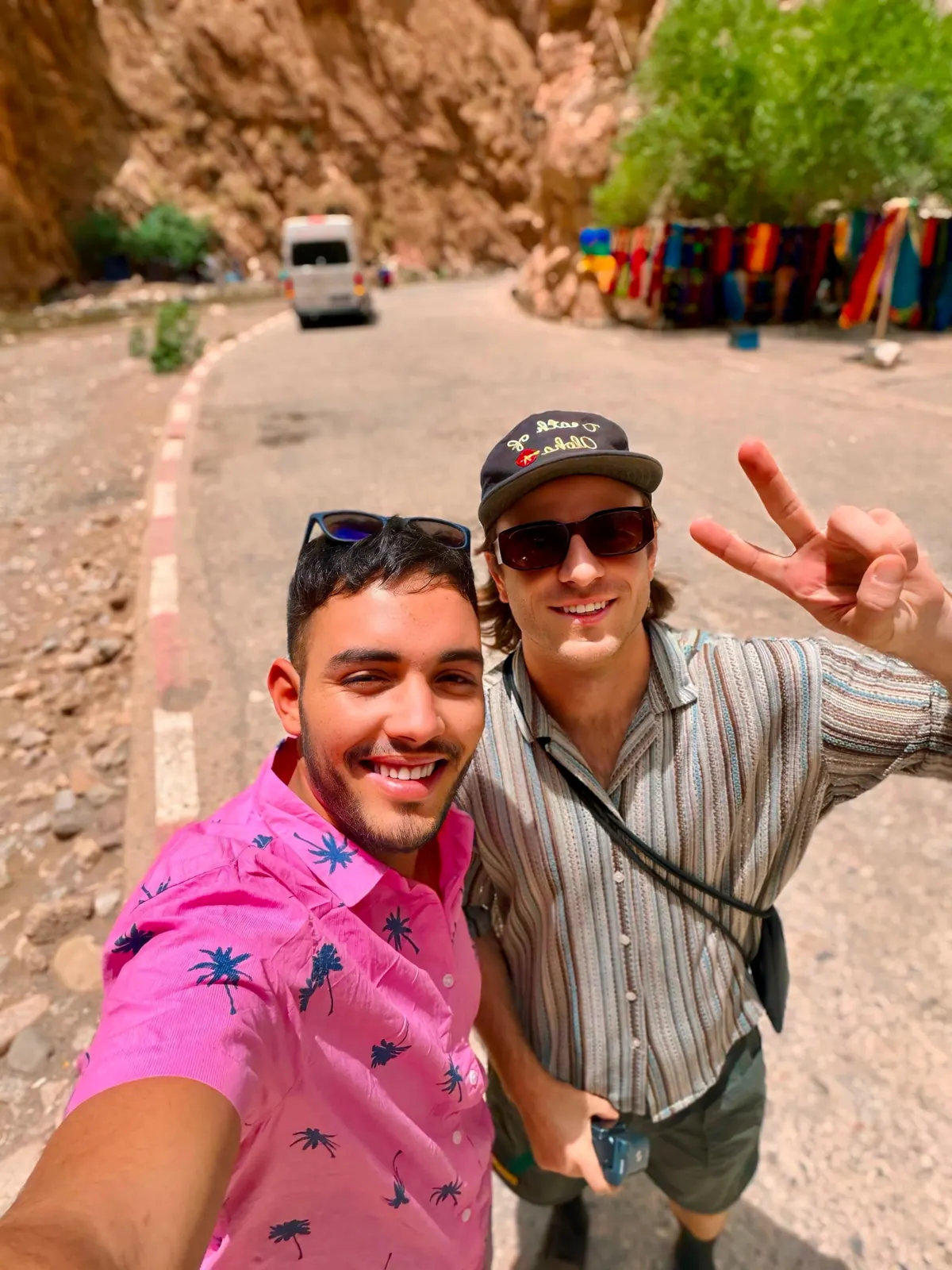
- Day 2: walk through the Todra Gorge, drive to Merzouga, camel trek at sunset and a night in a desert camp.
- Day 3: sunrise over the dunes, visit to the Gnawa village of Khamlia and a local school or cooperative where arranged in advance, then drive to Ouarzazate through the Draa Valley.
- Day 4: the kasbahs of Ouarzazate, then back over the High Atlas to Marrakech for departure.
The drive from Marrakech to Merzouga is around 560 km, so we always split it over two days with regular stops. Long days on the road are the part of a Morocco school trip that most catches teachers out, and building in breaks matters more than squeezing in one extra sight.
Safety, supervision and wellbeing
We are honest with teachers: Morocco is generally a safe country for groups, and most issues are the same as anywhere else, such as tiredness, sun, stomach upsets and petty theft in crowded places. Our standard approach includes:
- Licensed vehicles with experienced drivers who know the mountain roads, and no night driving on long transfers.
- Official licensed guides in the medinas of Marrakech and Fes, where it is easy for a group to get separated.
- Bottled or filtered water always available, and meals at places we use regularly.
- A named local coordinator reachable by phone around the clock.
- Camps with separate tents for students and staff, and toilets and washing facilities on site.
For more on how we look after younger travellers in the dunes, see our article on whether the Sahara is safe for children. We also suggest teachers carry a copy of every student's passport and insurance details, and that schools arrange travel insurance that covers the whole group. In Morocco the emergency numbers are 19 for police, 177 for the Royal Gendarmerie outside cities, and 15 for ambulance services.
Budgeting a school trip
Costs vary with group size, season and hotel standard, but as a guide our student itineraries start from around €250 per person for four days on land, excluding flights. The price per head falls as the group grows, and many operators, including us, offer free places for accompanying staff above a certain group size. If cost is the main concern, our guide to a budget Sahara trip for students explains where you can save without cutting corners on safety.
Students will want spending money in Moroccan dirham (MAD). Around 300 to 500 MAD for a week covers snacks, drinks and small souvenirs. The dirham is a closed currency, so it is normally obtained on arrival from ATMs or exchange offices rather than at home.
Cultural preparation for students
A short briefing before departure makes a real difference. We recommend covering:
- Dress: shoulders and knees covered in towns and villages for everyone.
- Photography: always ask before photographing people, and accept a polite no.
- Greetings: a simple salam alaikum and shukran (thank you) open many doors.
- Bargaining: expected in souks, but done with good humour and never after agreeing a price.
- Left hand: it is polite to eat and pass food with the right hand.
Our broader student trip to Morocco guide goes into more detail on preparing young travellers, and it is worth sharing with parents too.
Making the desert part educational
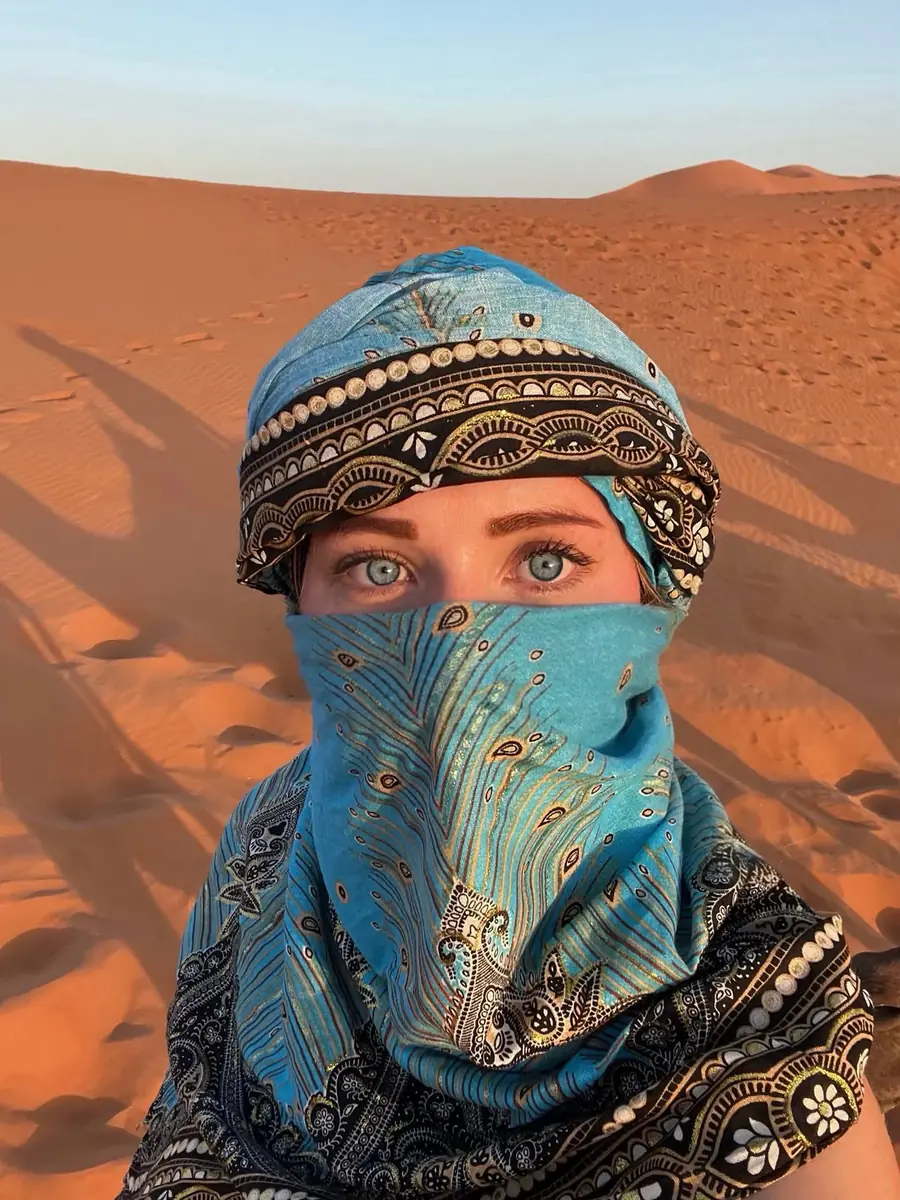
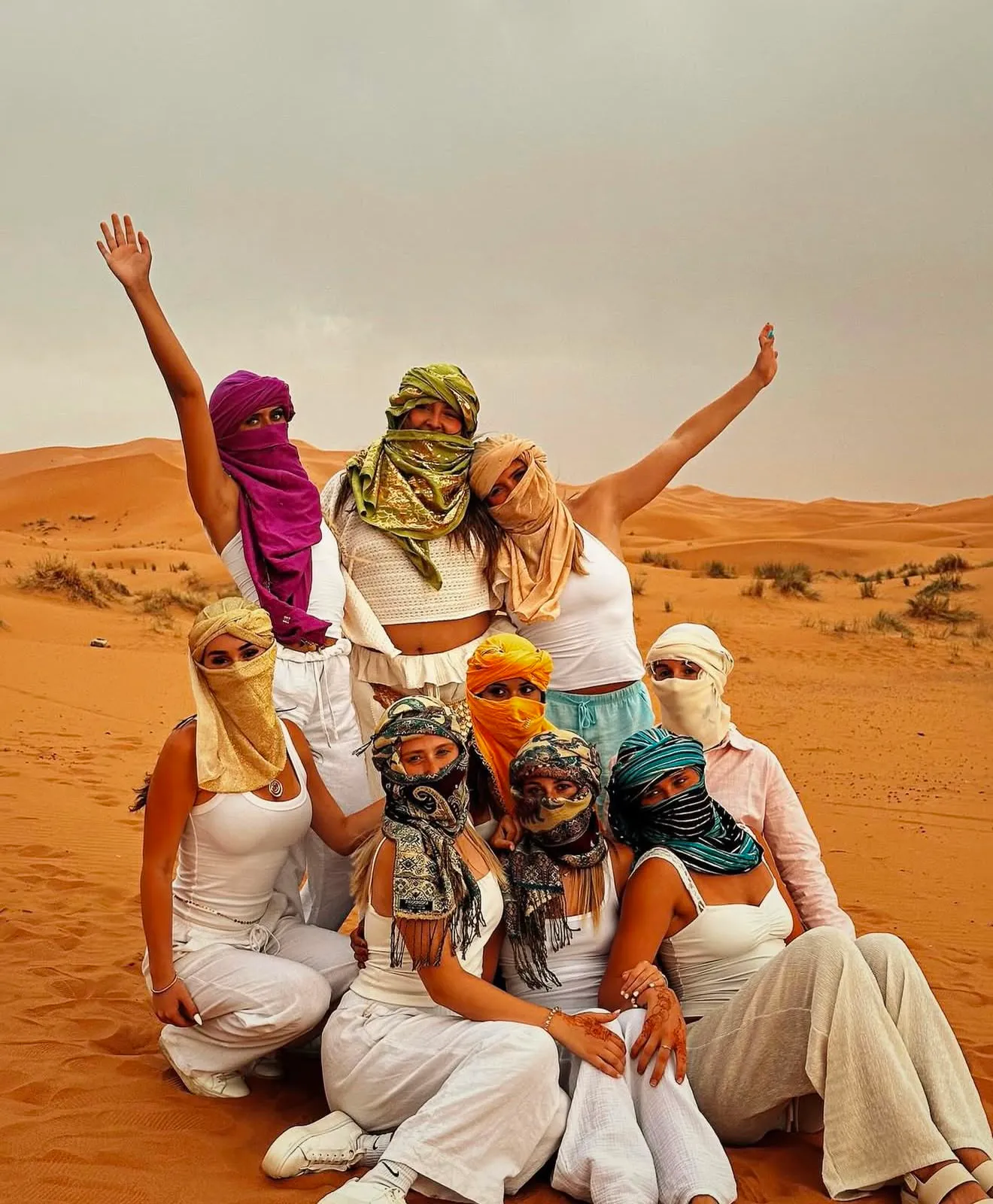
The night at camp is usually the highlight, and it is easy to add structured learning without spoiling the magic. Our team can talk to students about how dunes move with the wind, how nomadic families find water and grazing, and how the date palms of the Tafilalet oasis are irrigated. After dinner, when the generators go off and the sky fills with stars, we point out constellations and the Milky Way. Some teachers set a journal task, a photography brief or a short presentation for the next day, which works well on the long drive to Fes.
Plan your school trip to Morocco with us
We are a small local team based in Merzouga, and we are happy to build a school programme around your learning aims, dates and budget. Start with our 4-day student group trip, or send us your group size and preferred dates and we will prepare a tailored proposal and answer every question from your risk assessment.