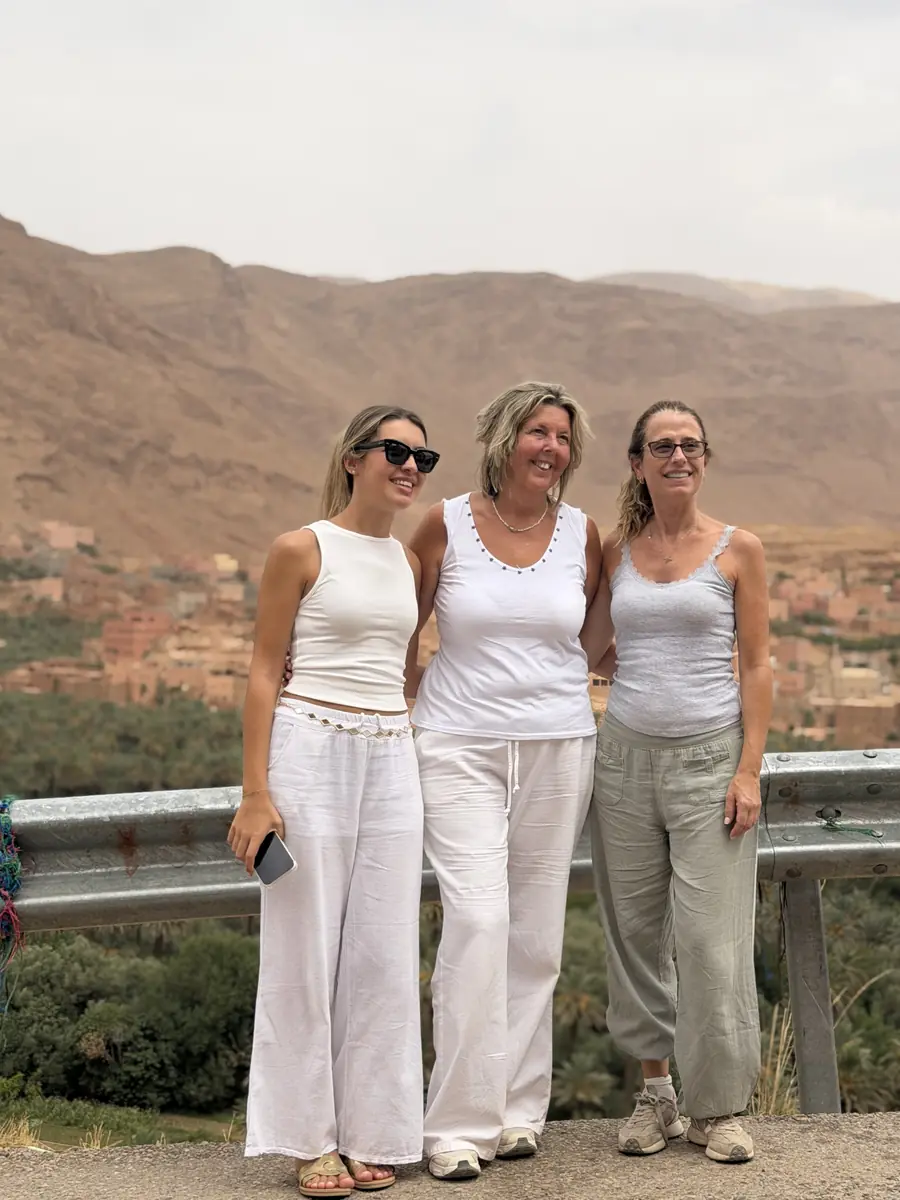
Quick answer: The Dades Valley and the Todra Gorge are two dramatic canyons on the southern side of the High Atlas, about 70 km apart, on the main route from Marrakech to the Merzouga desert. The Dades is known for its winding road and red rock formations; the Todra for its narrow gorge with walls around 300 m high near Tinghir. Most travellers spend a night in the Dades and walk into the Todra the next day on the way to the dunes.
For many of our guests, the canyons are the surprise of the trip. They come for the Sahara and find themselves silent at the foot of the Todra's orange cliffs or on a terrace looking down on the hairpin bends of the Dades. This is our practical guide to both, from the people who drive this road every week.
Where Are the Dades Valley and Todra Gorge?
Both lie along the Road of a Thousand Kasbahs, the route that runs east from Ouarzazate between the High Atlas to the north and the Jbel Saghro range to the south. Heading east from Ouarzazate, you pass the palm oasis of Skoura and the Valley of Roses at Kelaat M'Gouna before reaching Boumalne Dades, about 115 km from Ouarzazate, where the road into the Dades Gorge begins. Tinghir, the town at the mouth of the Todra Gorge, is about 55 km further east, and the gorge itself around 15 km north of Tinghir.
| From | To | Distance | Drive |
|---|---|---|---|
| Marrakech | Boumalne Dades | ~310 km | 5.5–6 h |
| Boumalne Dades | Todra Gorge | ~70 km | 1–1.25 h |
| Todra Gorge | Merzouga | ~200 km | 3–3.5 h |
| Todra Gorge | Fes (via Er-Rich) | ~420 km | 7 h |
The Dades Valley
What makes it special
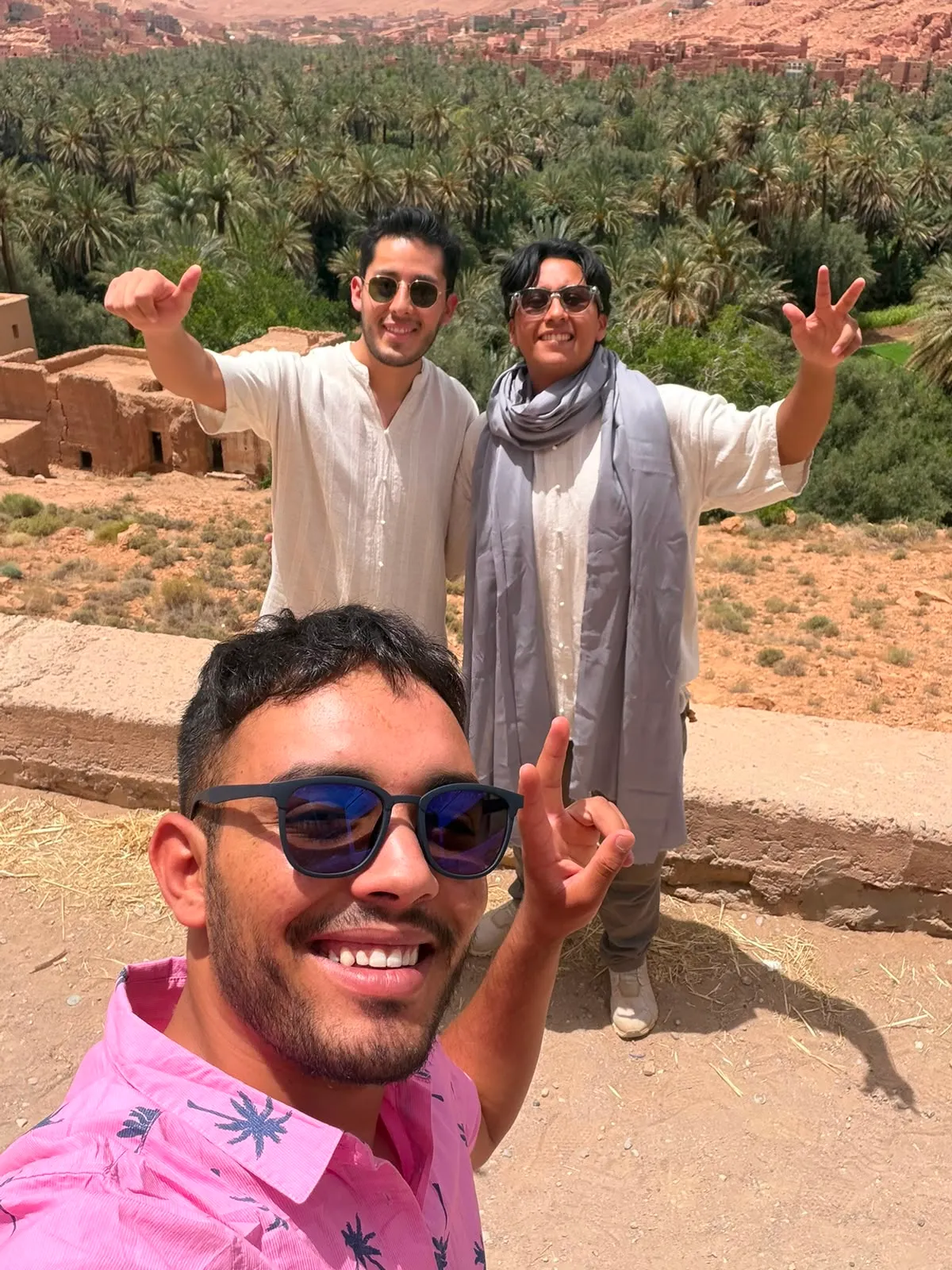
The Dades river has carved a long valley lined with fig, almond and walnut trees, earthen villages and crumbling kasbahs, framed by red and ochre cliffs. The landscape changes every few kilometres, which is why many travellers prefer to spend the night here rather than just pass through.
Highlights
- The Monkey Fingers: rounded rock formations that look like knuckles or brains, about 15 km into the gorge from Boumalne. A short walk among them is a favourite with families.
- The switchback road: near the village of Tamellalt, the road climbs in a series of tight hairpin bends. The view from the café at the top is one of the most photographed in Morocco.
- Village walks: a guided walk through the fields and villages shows how families still farm tiny terraced plots irrigated by channels from the river.
- Valley of Roses: just west, Kelaat M'Gouna holds a rose festival each May, when damask roses are harvested for rose water and oil.
The Todra Gorge
What makes it special
The Todra river cuts through a limestone plateau to form a canyon whose final stretch narrows to around 10–30 m wide with vertical walls about 300 m high. Walking along the shallow stream between these walls, with the light changing on the rock, is unforgettable, especially in the morning or late afternoon.
Highlights
- The narrows: the most dramatic section is easily accessible on foot from the car park, a flat walk of a few hundred metres.
- Tinghir palm grove: one of the most beautiful oases in the south, stretching for kilometres below the town. A walk through it with a local guide takes 1–2 hours.
- The loop hike: fit walkers can climb a mule track from the gorge up to the plateau and descend via a neighbouring valley, about 3–4 hours with a guide, often meeting nomad families on the way.
- Rock climbing: the gorge walls have hundreds of bolted routes, and climbers visit in spring and autumn.
Where to Stay
Most desert tours from Marrakech spend their first night in the Dades Valley, in family-run hotels and kasbah guesthouses along the gorge road. Staying here means you can watch the cliffs glow at sunset and wake to the sound of the river. There are also good guesthouses right inside the Todra Gorge and in Tinghir. If you like kasbah-style lodgings, the Skoura palm grove is another peaceful option.
Best Time to Visit
- Spring (March–May): almond blossom, green fields and roses in May. Ideal for walking.
- Autumn (September–November): warm days, cool nights and harvest time for dates and apples.
- Summer: hot in the valleys during the day, but the gorges offer shade and the river is refreshing.
- Winter: sunny days, but nights near freezing at around 1,500–1,600 m altitude; heavy rain, though rare, can briefly raise the rivers.
How to Visit on a Desert Tour
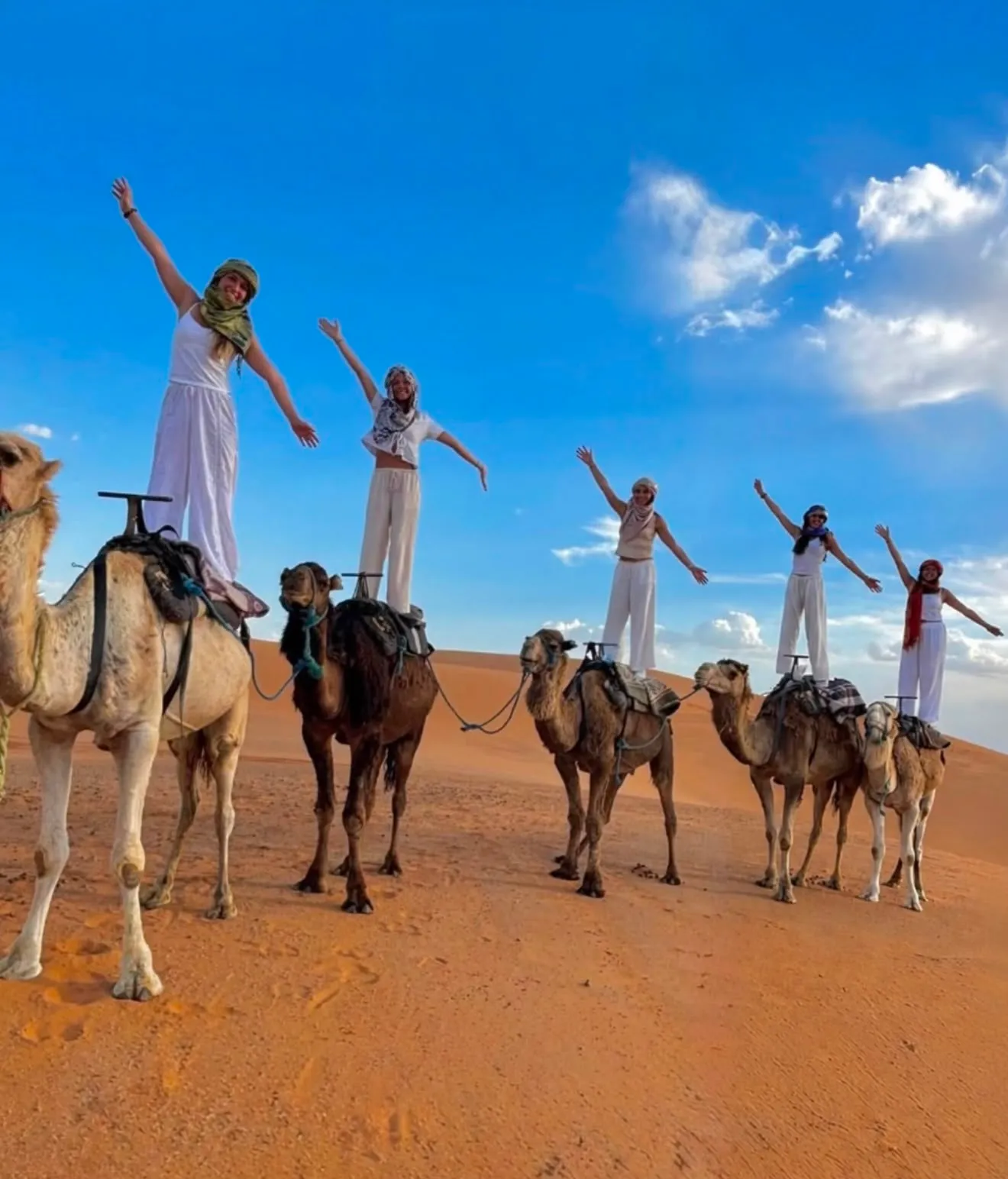
On our routes, the typical rhythm is: Aït Benhaddou and Ouarzazate on day one, a night in the Dades Valley, then the Todra Gorge the next morning before continuing to Merzouga for a camel ride and a night in the dunes. Our 4-day Marrakech to Fes Sahara tour includes both canyons at a relaxed pace and ends in Fes rather than looping back to Marrakech.
If you are still deciding how long to stay in Morocco, our 7-day itinerary and our Aït Benhaddou visitor guide show how the canyons fit with the rest of the southern route.
Practical Tips
- Wear shoes you can get wet in the Todra: the stream crosses the path in places.
- Arrive at the Todra early or after 4 pm to avoid the midday tour buses.
- Carry cash; the ATMs are in Boumalne Dades and Tinghir.
- Ask before photographing people in the villages, and dress modestly.
- If you suffer from car sickness, sit in front on the switchback road.
Travel Through the Canyons with Us
We would love to show you these valleys on the way to our home in the dunes. Book our 4-day Sahara tour from Marrakech to Fes, from €360 per person, or contact us to add an extra night for hiking in the Dades or Todra.