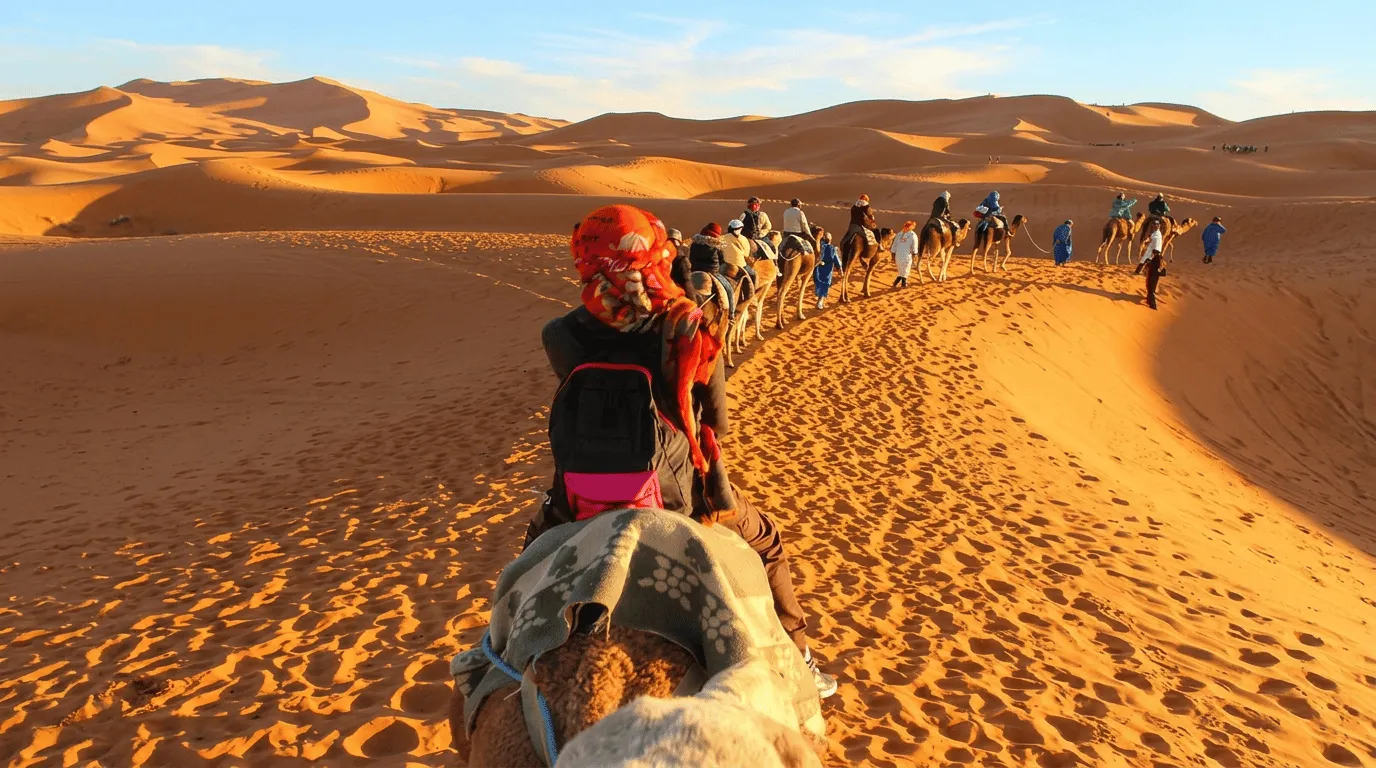
Quick answer: For a Sahara desert trip, pack loose breathable layers, a warm jacket for the night, a scarf to protect your face from sun and sand, sunglasses, high-SPF sunscreen, closed shoes or sandals you can empty easily, a headlamp and a small backpack for your night at camp. In winter add thermal layers and a hat; in summer focus on light, covering clothes and extra water.
Every week we meet guests who packed for "hot desert" and then shivered at the campfire, or who dragged a big suitcase up to the camel. The Sahara is simpler to pack for than you might think, but a few items make a real difference. This is the same list we send to travellers before they join us in Merzouga.
First, understand the desert climate
The key thing to remember is the temperature swing. In Erg Chebbi, a spring afternoon can be 30°C and the same night 12°C. In winter, days around 18°C are followed by nights close to freezing. In summer, afternoons often exceed 40°C. So whatever the month, you need both sun protection and at least one warm layer. Our guide to the best time to visit Merzouga gives the details for each season.
Clothing
- Loose, light long sleeves and trousers. They protect you from the sun better than shorts and a tank top, and they are also respectful in villages along the way.
- A warm layer: a fleece or light down jacket all year; a proper winter coat from December to February.
- Thermal base layers for winter nights at camp.
- Comfortable trousers for the camel ride. Soft, stretchy fabrics are better than stiff jeans.
- Something to sleep in and fresh socks. Warm socks in winter are a small luxury you will be grateful for.
- A hat or cap for the day and a beanie for winter nights.
The scarf: your most useful item
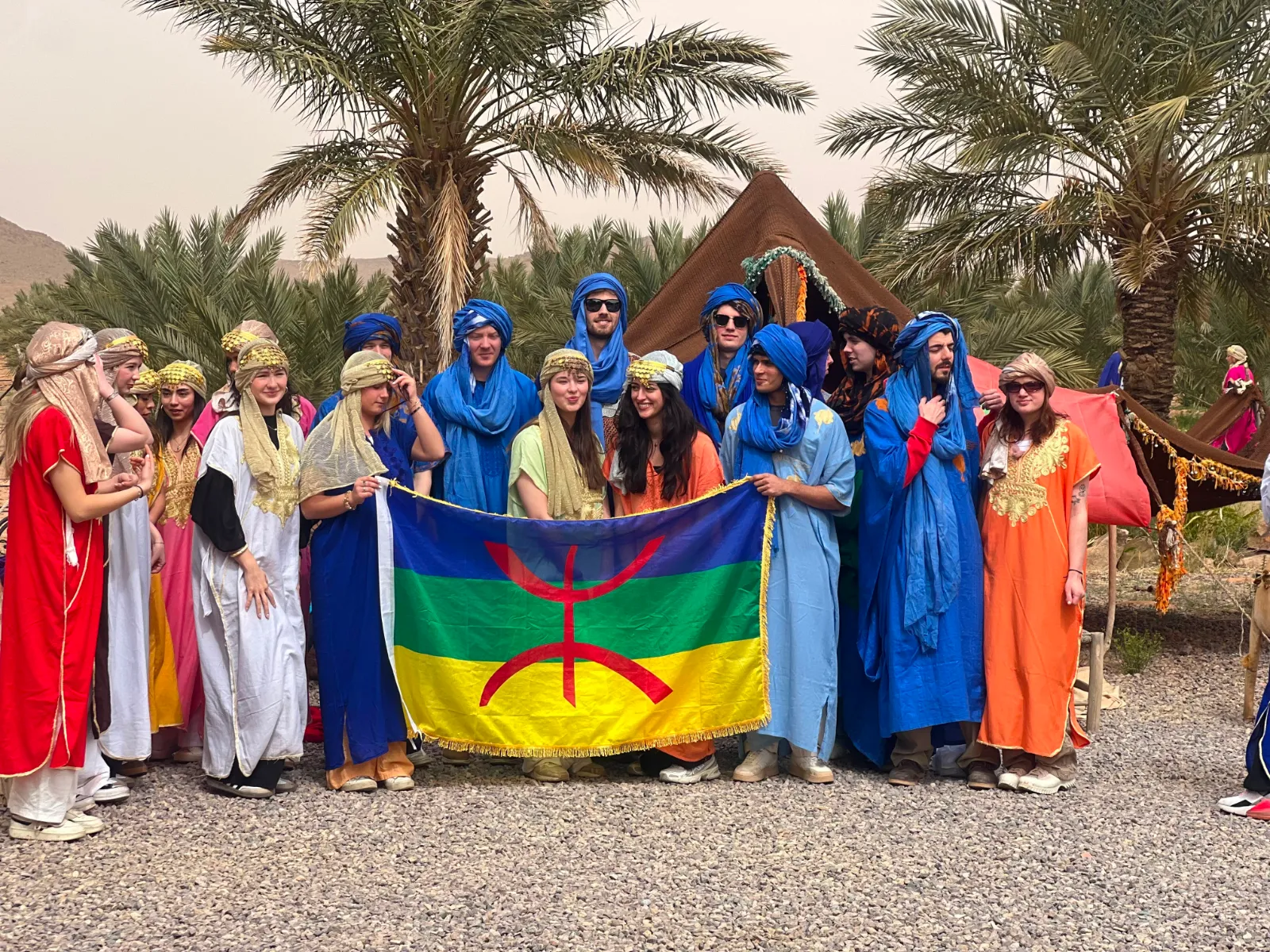
A long cotton scarf, the cheche or turban worn by desert people, is the single most useful thing you can bring. It shades your head and neck, protects your face if the wind picks up sand, keeps you warm at night and doubles as a pillow cover or blanket. You can buy one cheaply in Rissani or Merzouga, and our team is happy to show you how to tie it Berber-style before the camel ride.
Shoes
Sand gets into everything, so think easy. Sandals or light trainers are best for the dunes; many people end up walking barefoot on the sand in the evening, which is lovely once the ground cools. In summer, though, the sand can be too hot to touch in the afternoon, so never go barefoot at midday. Bring closed shoes for the Todra Gorge and other walks along the route.
Sun and health essentials
- High-SPF sunscreen and lip balm with SPF
- Good sunglasses, ideally wraparound to keep out wind and sand
- A refillable water bottle; we provide drinking water at camp
- Any personal medication, plus rehydration salts and something for an upset stomach
- Moisturiser and eye drops; the air is very dry
- Hand sanitiser and a small pack of tissues
Your overnight bag for the camp
This is where many people get it wrong. When you ride a camel into the dunes, your main suitcase normally stays behind at the auberge in Merzouga or Hassilabied. You only take a small backpack for one night. Inside it we suggest:
- Warm layer and a change of clothes
- Toothbrush, toothpaste and small toiletries
- Headlamp or torch (the camp is lit, but walking on the dunes at night is dark)
- Phone, camera and a power bank; charging at camps can be limited
- Scarf, sunglasses and sunscreen
- Any medication you need overnight
A backpack with two straps is easier than a shoulder bag on a camel. Keep it light; you will carry it up the dune for sunrise too.
Camera and tech
Fine sand is hard on electronics. Keep your camera or phone in a zip bag when not in use, avoid changing lenses in the wind, and bring a soft cloth. A small tripod is great for night sky photos, as Erg Chebbi skies are very dark. Power banks are essential because camps run on solar power and outlets are limited.
Seasonal extras
Winter (December-February)
Thermal underwear, gloves, a beanie and a proper jacket. The High Atlas passes on the way can be cold or snowy.
Summer (June-August)
Very light, covering clothes in pale colours, an electrolyte supply, and a wide-brimmed hat. Plan outdoor activities for early morning and late afternoon.
Spring (March-May)
Your scarf and sunglasses are especially useful on windy days, when sand can blow for a few hours.
Dress respectfully along the way
The desert trip is not only dunes. You will pass through villages, stop at kasbahs and markets such as Rissani, and share meals with local families. Clothes that cover shoulders and knees are appreciated everywhere in rural Morocco, for both men and women, and they also happen to be the most practical option against sun and wind. A light cardigan or shirt over a T-shirt is an easy solution.
What you do not need
- Heavy hiking boots, unless you plan real mountain trekking elsewhere
- A sleeping bag: our camps provide beds, sheets and warm blankets
- Lots of cash for the dunes; bring some dirhams for small purchases and tips, and use ATMs in Erfoud or Rissani
- Expensive jewellery
More planning help
Still working out logistics? Read our guide to getting to Merzouga, then learn what to expect in the Erg Chebbi sand sea itself.
Pack light and travel with us
Once your bag is ready, the rest is easy. On our 3-day desert journey from Fes to Marrakech via Merzouga, from €260 per person, we look after transport, meals at camp and all the details, so you only need your small overnight bag. Contact our team if you have questions about what to bring for your dates; we are always happy to help.