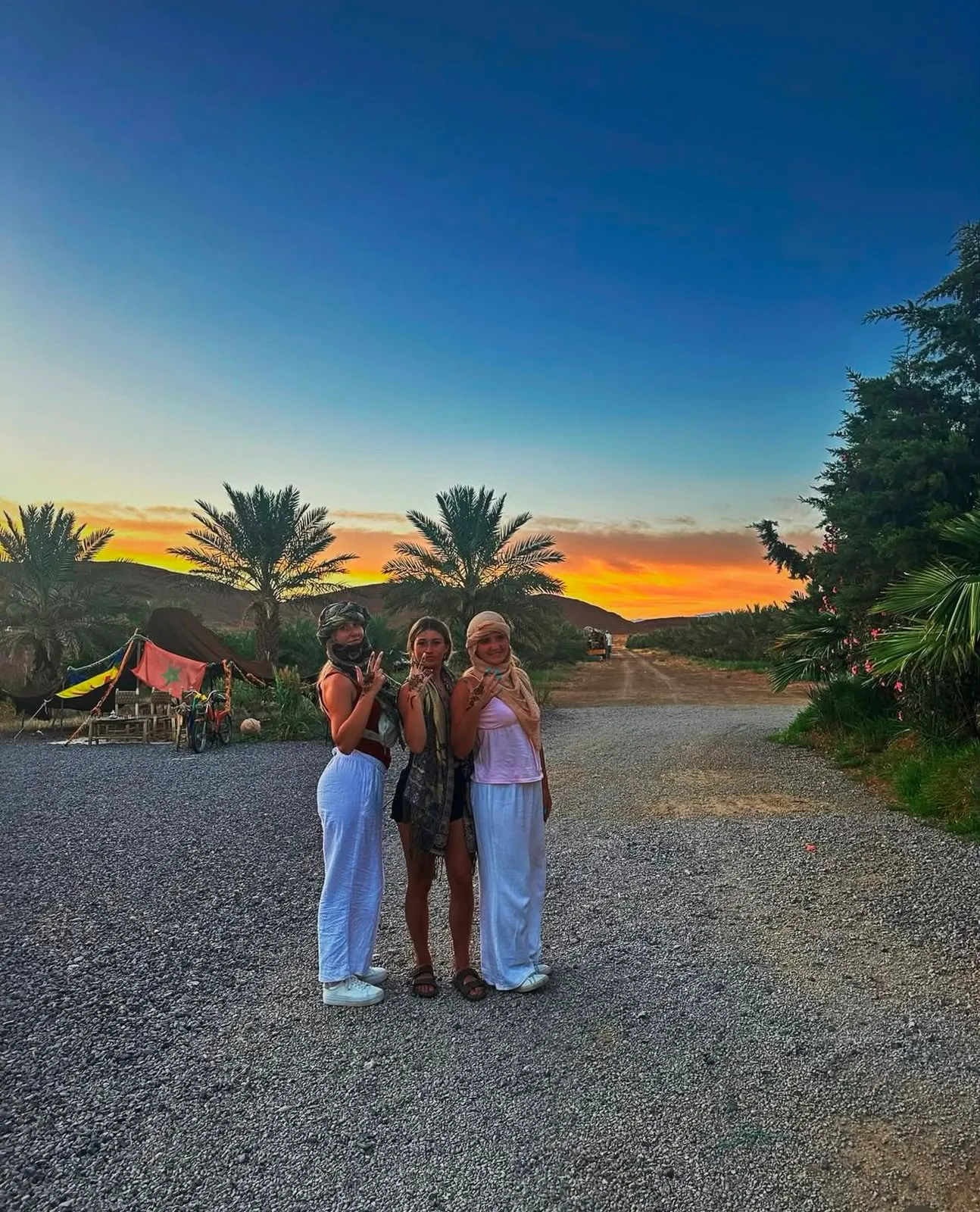
Quick answer: Morocco's best months are March to May and late September to November, when cities are warm and the Sahara is pleasant day and night. Summer (June to August) is very hot inland, often above 40 °C in Merzouga, while winter (December to February) brings sunny, mild days, cold nights in the desert and snow in the High Atlas.
Morocco is often imagined as hot all year, but its weather varies hugely between the Atlantic coast, the imperial cities, the High Atlas and the Sahara. On a single trip you can go from a cool morning in Fes to a snowy mountain pass to a warm afternoon in the dunes. Here is our month-by-month guide, written from where we live, at the edge of Erg Chebbi.
Morocco's climate zones in brief
- Atlantic coast (Casablanca, Rabat, Essaouira): mild all year, cooled by the ocean; Essaouira is famously windy.
- Imperial cities (Marrakech, Fes, Meknes): hot summers, mild winters, with cold nights from December to February. Fes is a little cooler and wetter than Marrakech.
- High and Middle Atlas: cool to cold, with snow in winter on higher ground and passes such as the Tizi n'Tichka (2,260 m).
- Pre-Sahara and Sahara (Ouarzazate, Dades, Merzouga): very dry, big differences between day and night, extreme summer heat.
Average temperatures by month
The figures below are approximate daytime highs and night-time lows. Individual years vary, and heatwaves or cold snaps do happen.
| Month | Marrakech (high / low) | Merzouga (high / low) |
|---|---|---|
| January | 18 °C / 6 °C | 18 °C / 3 °C |
| February | 20 °C / 7 °C | 21 °C / 6 °C |
| March | 23 °C / 10 °C | 25 °C / 10 °C |
| April | 25 °C / 12 °C | 29 °C / 14 °C |
| May | 29 °C / 15 °C | 34 °C / 19 °C |
| June | 33 °C / 18 °C | 40 °C / 24 °C |
| July | 37 °C / 21 °C | 44 °C / 28 °C |
| August | 37 °C / 21 °C | 42 °C / 27 °C |
| September | 32 °C / 18 °C | 36 °C / 22 °C |
| October | 28 °C / 14 °C | 29 °C / 15 °C |
| November | 22 °C / 10 °C | 23 °C / 8 °C |
| December | 19 °C / 7 °C | 19 °C / 4 °C |
Nights in the open desert and at camp can be several degrees colder than these town averages, particularly in winter.
Month by month
January and February
Cool, bright and quiet. Cities are pleasant for walking, though riads can feel chilly at night, so ask about heating. The High Atlas often has snow, which is beautiful but can close the Tizi n'Tichka pass for a few hours. In the Sahara, days are sunny and mild, perfect for camel treks, but nights at camp can fall close to freezing. Good camps provide thick blankets. Almond blossom appears in the valleys in February.
March to May
Spring is one of the best times to visit Morocco. The countryside is green, the Dades Valley is at its most colourful and the Kelaat M'Gouna rose harvest is celebrated in May. In the desert, days are warm and nights comfortable. Spring is also the windiest season, and occasional sandstorms (chergui winds) can blow for a few hours. Easter is busy, so book ahead.
June to August
Summer is hot inland, especially in the south. Merzouga regularly reaches 40 to 45 °C in the afternoon. Desert trips are still possible, and we adapt by doing camel treks late in the evening and early in the morning, with a long siesta in between, but it is not ideal for young children, older travellers or anyone sensitive to heat. The coast and the mountains are pleasant escapes. Summer is also when many Moroccans holiday, so coastal towns are lively.
September to November
Autumn is our other favourite season. The heat eases through September, and October and November bring golden light, warm days and comfortable nights in the dunes. The date harvest takes place in the Tafilalet oasis around Erfoud. Occasional autumn storms can bring brief heavy rain to the mountains and, rarely, flash floods, so we always keep an eye on forecasts.
December
Short, sunny days and cold nights. Christmas and New Year are among the busiest weeks in the desert, as many Europeans come to see in the new year under the stars. Book camps and hotels well in advance, and pack a warm jacket, hat and gloves.
Best time to visit Merzouga
For most travellers, March to May and October to November give the best balance of warm days and cool nights. Winter is great if you pack properly and like fewer crowds. We explain this in more detail in our dedicated guide to the clothing you need in each season, and there is plenty more practical advice in our article on handling money on the road.
Other things to consider
- Ramadan: its dates shift about eleven days earlier each year. Travel is fine, but some restaurants close during the day and opening hours change.
- School holidays: European half-terms and Easter increase demand and prices.
- Rain: it rarely rains in Merzouga, but when it does, the dunes smell wonderful and the seasonal lake near the village may fill and attract flamingos.
- Daylight: in December you have around ten hours of daylight, so long driving days need an early start.
Once you know when to go, our guide to Moroccan food to try will make the planning even more enjoyable.
Plan your trip around the best weather
Our 12-day grand Morocco tour from Casablanca covers the coast, the imperial cities, the Atlas and the Sahara, so you experience each climate at its best. Tell us your travel month through our contact page and we will suggest the right route and pace for the season.