Quick answer: Tipping in Morocco is customary but never compulsory. As a guide, leave 5 to 10% in restaurants, round up in cafes, give 10 to 20 MAD to porters and helpers, around 100 to 200 MAD per day from a group for a private guide, and a similar amount for a driver on multi-day tours. Tip in dirham, in cash, and adjust to the quality of service.
Tipping is one of those things that makes visitors uneasy, simply because the rules are unclear. We work in tourism in Merzouga, and many of the people who make your trip happen, from cameleers to kitchen staff, rely on tips as part of their income. At the same time, nobody should feel pressured. Here is a practical, honest guide to tipping in Morocco.
How tipping works in Morocco
A tip is often called pourboire in French or baksheesh informally. It is a normal part of daily life for Moroccans too, not just for tourists. Wages in hospitality and tourism are modest, and tips are a meaningful addition. That said, a tip should reward good service, not be demanded. If someone performs a service you did not ask for, such as carrying your bag without asking or giving unrequested directions, you are not obliged to pay.
Always tip in Moroccan dirham (MAD). Euros or dollars are hard to change in small amounts, and coins in foreign currency are almost useless. Keep a stash of small notes (20 and 50 MAD) and coins, which are surprisingly hard to get in the desert.
Tipping amounts at a glance
| Service | Typical tip |
|---|---|
| Restaurant meal | 5–10% of the bill, if service not included |
| Cafe drink | Round up, or 2–5 MAD |
| Hotel or riad porter | 10–20 MAD per bag trip |
| Housekeeping | 10–20 MAD per night |
| Local city guide (half day) | 50–100 MAD per person or 100–200 MAD per group |
| Private driver on a multi-day tour | Around 100–200 MAD per day from the group |
| Camel guide (sunset trek) | 50–100 MAD per person or couple |
| Desert camp staff | 50–100 MAD per group, given to the camp manager |
| Public toilet attendant | 2–5 MAD |
| Car park attendant | 2–10 MAD |
These are guidelines, not rules. If service was poor, tip less or not at all; if someone went out of their way for you, tip more.
Restaurants and cafes
In simple local cafes, rounding up is enough. In tourist restaurants, check whether a service charge is already on the bill; if not, 5 to 10% is appreciated. Leave cash on the table or hand it to the waiter, as tips added to card payments do not always reach staff.
Guides
Licensed city guides in Marrakech and Fes are paid by their agency or by you directly, but tips are expected for a good tour. Remember that a licensed guide should carry an official badge. Unofficial “helpers” in the medina who attach themselves to you are a different matter; a firm but friendly la, shukran (no, thank you) at the start avoids awkward requests later.
Drivers on multi-day tours
On a desert tour, your driver often doubles as a guide, translator, problem solver and storyteller for days on end. Most travellers tip at the end of the trip, in an envelope or simply handed over with a thank you. A common range is around 100 to 200 MAD per day from the whole group, more for larger groups or exceptional service. On a long itinerary such as our 12-day grand Morocco tour from Casablanca, it is worth setting aside the tip budget in advance so you are not scrambling for cash at the end.
Tipping in the desert
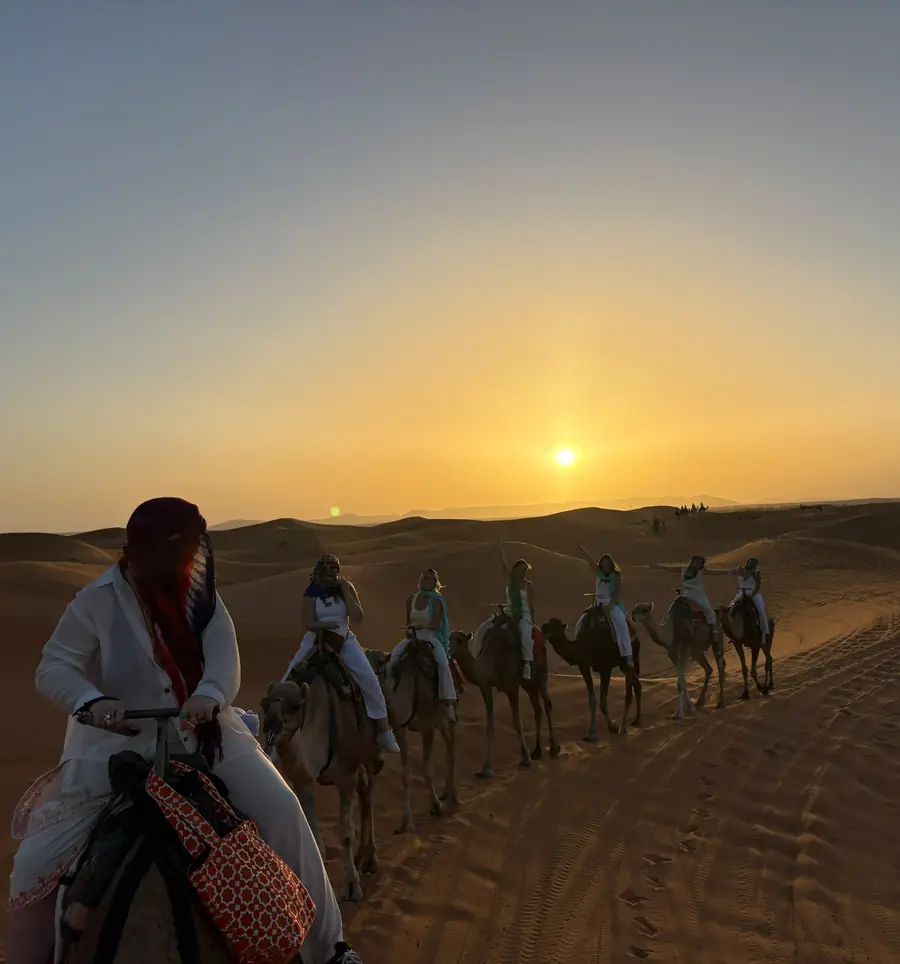
This is the part we know best. On a camel trek and camp night in Merzouga, several people look after you:
- The cameleer who leads your camels, often on foot across the sand.
- The camp team who cook, serve dinner, play drums around the fire and prepare breakfast.
- The driver or 4x4 guide if you take an excursion to Khamlia or the nomads.
We suggest tipping the cameleer directly at the end of the ride, and giving a single tip for the camp team to the manager, who shares it. There is no need to tip every person separately. If you buy something at a nomad tent or a music show in Khamlia, that purchase or a donation is a fair way to say thank you.
Photos and small favours
If you photograph a street performer, a water seller in costume, or someone's animals, a tip of 10 to 20 MAD is expected. Always ask first; many people, especially women, prefer not to be photographed at all. Children sometimes ask for money or sweets in villages. We gently suggest not giving either, as it can encourage kids to skip school; supporting a local cooperative or school project is a better alternative.
Practical tips on tipping
- Break big notes at supermarkets, petrol stations or hotel receptions whenever you can.
- Keep tip money separate from your main wallet so you are not showing a thick roll of notes.
- For groups, collect one tip for the driver and guide at the end rather than individual handouts.
- Do not feel guilty about saying no to unsolicited services.
For advice on getting cash, which ATMs to use and whether you can pay by card in the desert, read our guide to money, ATMs and cards in Morocco. And for other cultural etiquette, our honest article on safety in Morocco covers scams and faux guides in more detail.
Is tipping included in our tours?
Our tour prices include the services listed in each itinerary, but not tips, which we leave to you as a personal gesture based on your experience. We would rather our guests tip because they want to, not because they feel they have to, and we never ask on behalf of our team.
Plan your trip with confidence
With our 12-day grand tour of Morocco, everything from hotels to drivers is arranged, and we will happily give you a realistic tip budget for your itinerary in advance. Ask us any question before you travel; no question about money or etiquette is too small.