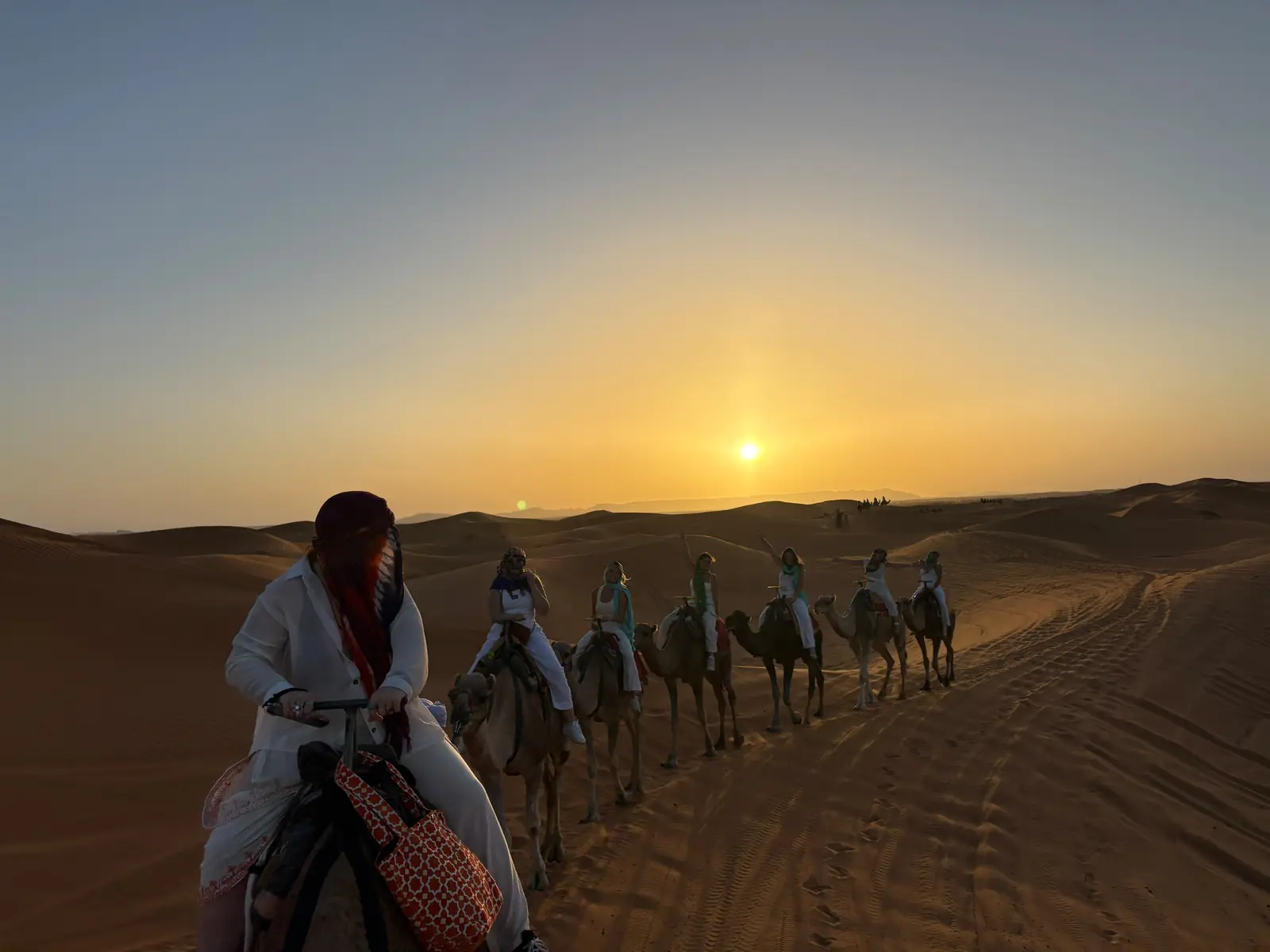
Quick answer: Yes, Morocco is generally safe for tourists, and millions visit each year without serious problems. The main risks are petty theft, persistent touts and scams in busy medinas, and road accidents, rather than violent crime. Normal city precautions, respectful dress and a licensed guide or driver for long journeys go a long way.
It is the question we are asked most often, usually before people book. We live and work in Merzouga, and we would rather give you a balanced answer than a sales pitch. Morocco is a stable, welcoming country with a large and well-developed tourism industry, but like anywhere it has its own annoyances and risks. Here is what we tell our own guests.
The overall picture
Morocco has a strong, visible police presence in cities and tourist areas, including a dedicated tourist police in places such as Marrakech and Fes. Tourism is a major part of the economy, and the authorities take the safety of visitors seriously. Most government travel advisories, including those of the UK and many EU countries, place Morocco in their normal-precautions categories, while noting, as they do for most countries, a general risk of terrorism. Always check your own government's current advice before travelling.
In practice, the problems visitors actually meet are much more ordinary:
- Pickpocketing and bag snatching in crowded places.
- “Faux guides” who offer directions in the medina and then ask for money or lead you to shops.
- Taxi overcharging.
- Stomach upsets from unfamiliar food or water.
- Heat and sun, especially in the south.
- Road accidents, which are statistically a far bigger risk than crime.
Common scams and how to avoid them
- “The road is closed”: someone tells you the way ahead is closed and offers to guide you. It rarely is. Say la, shukran (no, thank you) and keep walking, or check your map.
- Henna offers: a woman grabs your hand to start a design, then asks for a large fee. Keep hands to yourself and agree prices first if you want henna.
- Taxis without meters: in cities, petit taxis should use the meter. If the driver refuses, agree a price before you get in or take the next one.
- Commission shops: some guides and drivers steer you to carpet or argan shops. There is no obligation to buy, and a good operator will not pressure you.
- Photos with animals or performers: in Jemaa el-Fnaa, taking a photo of a snake charmer or monkey handler means paying. We also suggest avoiding animal photo ops altogether for welfare reasons.
Is Morocco safe for women travelling alone?
Many women travel solo in Morocco and have a wonderful time, but we will be honest: verbal comments and unwanted attention in city medinas can be tiring. It is usually harassment rather than danger, and it tends to be less intense in rural areas and the desert, where hospitality is strong. Things that help:
- Dress modestly, with shoulders and knees covered. It does not stop all comments, but it reduces them. Our guide to what to wear in Morocco has practical outfit ideas.
- Walk with purpose, avoid engaging with persistent men, and use a firm la (no).
- Choose well-reviewed accommodation and ask staff to arrange taxis at night.
- Consider a guided day in the medina on your first day to get your bearings.
Is the Sahara safe?
The Merzouga area is calm and relaxed, and violent crime against visitors is very rare here. Most desert risks are environmental, and a reputable team manages them for you:
- Heat: from June to August daytime temperatures often exceed 40 °C. We shift activities to early morning and late afternoon.
- Getting lost: dunes all look alike. Never wander far from camp at night without a light, and never drive into the dunes without a local guide.
- Sandstorms: most common in spring. They are unpleasant rather than dangerous if you shelter and cover your face.
- Quad bikes: always wear a helmet and follow the guide; accidents happen when riders go off alone.
- Scorpions: rarely seen, and mostly in summer. Shake out shoes and do not walk barefoot at night.
Road safety
Morocco's roads have improved a lot, but road accidents remain the biggest real risk for travellers. Mountain roads such as the Tizi n'Tichka pass are winding, and some drivers overtake aggressively. Our advice is to avoid driving at night outside cities, not to rush long transfers, and to use experienced drivers who know the routes. This is one of the main reasons many visitors choose an organised itinerary rather than self-driving to the desert.
Health and food safety
- Drink bottled or properly filtered water. Tap water in big cities is treated, but a change of water often upsets stomachs.
- Freshly cooked, hot food such as tagines and grilled meat is usually a safe bet; be more careful with salads washed in tap water.
- Carry hand sanitiser and oral rehydration salts.
- Pharmacies are common in towns and pharmacists are knowledgeable, but pack any prescription medicines you need.
- Ask a travel health clinic about recommended vaccinations before you go, and make sure your insurance covers medical care.
Our guide to Moroccan food to try on a desert trip also includes tips on eating well without problems.
Money and theft
Carry only the cash you need for the day, spread cards between bags, and use ATMs inside banks or hotels during daytime. The local currency is the dirham (MAD), and cash is still king in villages and the desert. You can read more in our guide to money, ATMs and cards in Morocco.
Useful numbers
- Police (cities): 19
- Royal Gendarmerie (rural areas and roads): 177
- Ambulance and fire: 15
- From a mobile phone, 112 also works in many areas.
Save your embassy's contact details and keep a photo of your passport on your phone.
Respecting local customs
A lot of feeling safe comes down to understanding the culture. Moroccans are generally very hospitable, and a few words of Arabic or French, a smile and patience will be met with warmth. Avoid public displays of affection, ask before photographing people, be discreet about alcohol, and during Ramadan avoid eating or drinking in public during the day. Politics and religion are best discussed with curiosity rather than argument.
Our honest conclusion
For the vast majority of visitors, Morocco is a safe and rewarding country. The irritations of the medina fade quickly once you head south into the mountains and the desert, where life is slower and people have time to talk. Plan sensibly, travel with a trusted local team, and you are far more likely to remember the kindness than any problem.
Travel Morocco with a local team you can trust
If you would like the reassurance of licensed guides, experienced drivers and a local contact throughout, our 9-day Morocco experience of the imperial cities and Sahara covers the whole country at a relaxed pace. Any questions about safety before you book? Ask us directly and we will give you a straight answer.